Community Support & Sponsorship
-
![Scenic landscape of a lake surrounded by green hills and rugged mountains in the background under cloudy sky.]()
Community support & sponsorship
At Aerowork, supporting the communities we fly for is part of who we are. Our team lives and works in the same rural regions we serve, so backing local events, schools, and organisations isn’t just sponsorship — it’s our way of giving back to the places that support us.
Across the country, our pilots and area coordinators keep an ear to the ground and let us know where a small contribution can make a meaningful difference. From A&P shows, school pet days, community runs and local fundraisers, we’re proud to help keep these grassroots events thriving. If your community group is looking for support, we welcome you to get in touch — we’re always keen to hear where a helping hand can make a difference.
Our commitment to community is strengthened even further through the support of our parent company, Ravensdown. As a farmer-owned co-operative, Ravensdown invests in programmes that benefit rural New Zealand — from environmental initiatives to education, research, and community development. Together, Aerowork and Ravensdown share the same goal: supporting the resilience and wellbeing of the communities that keep our rural regions strong.
-
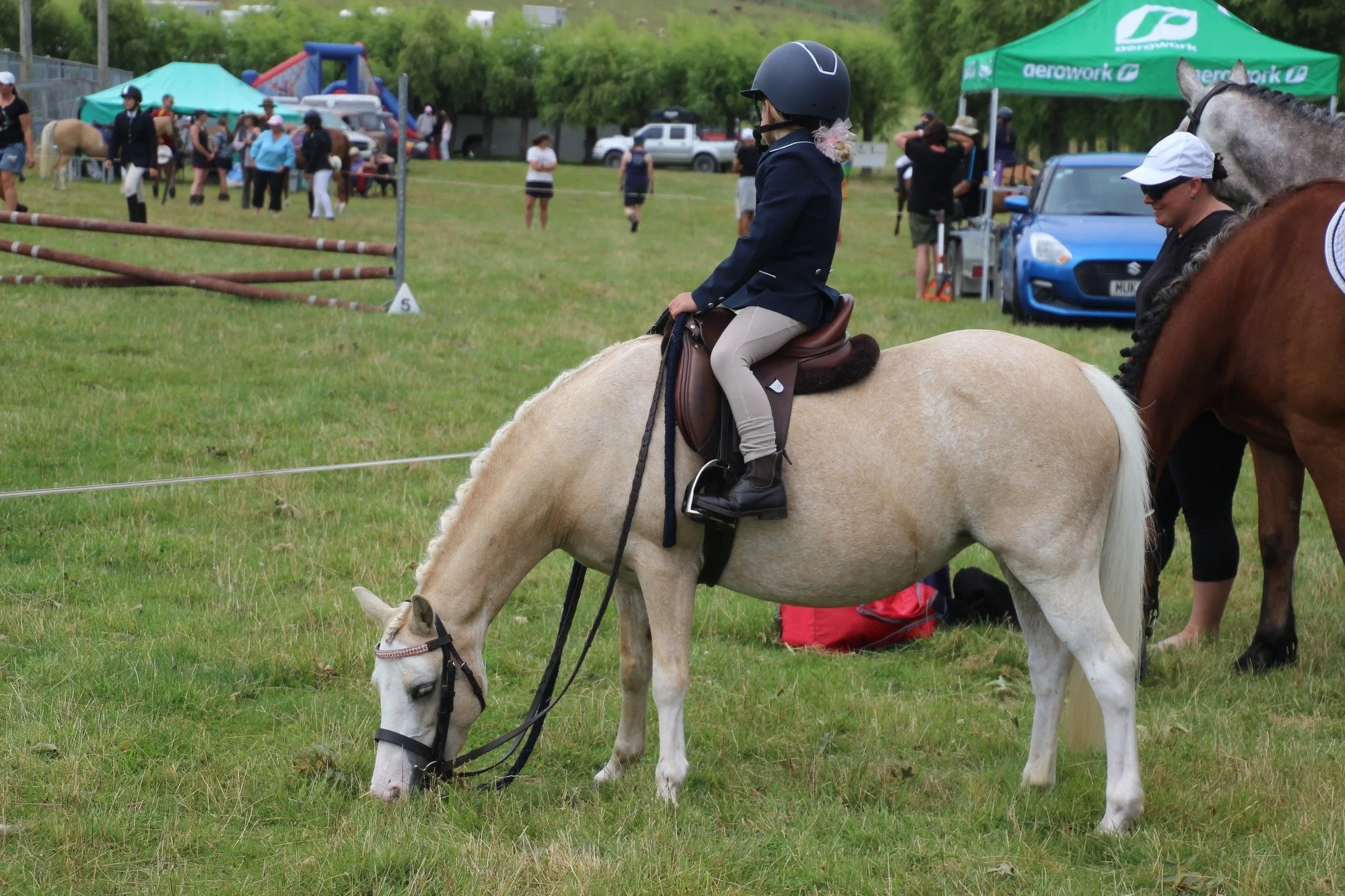
![A young rider in equestrian attire on a cream-colored horse grazing on grass at an outdoor event with other participants, tents, and vehicles in the background.]()
Recent support
Whether it’s a school event, a rural sports day, or a neighbour needing a hand after a storm, we’re proud to stand behind the people and places that make our rural communities what they are.
This year, our regional teams have supported a wide range of local initiatives, including:
Te Kuiti
• Maungahau Walk for a Cause
• Aria School Pet Day
• Piopio School Pet DayTaumarunui
• Mokauiti Hall — Jack Russell Race
• Matiere Cossie ClubTaranaki
• Ratapiko HallWhanganui
• Blazing Hills Walk/Run/Trail
• Waimarino A&P ShowMasterton
• Battle of the Babes — Fishing Competition
• East Coast Rugby ClubRangiora
• Hawarden A&P Show -
![]()
Mapping the future of farming at Piopio College
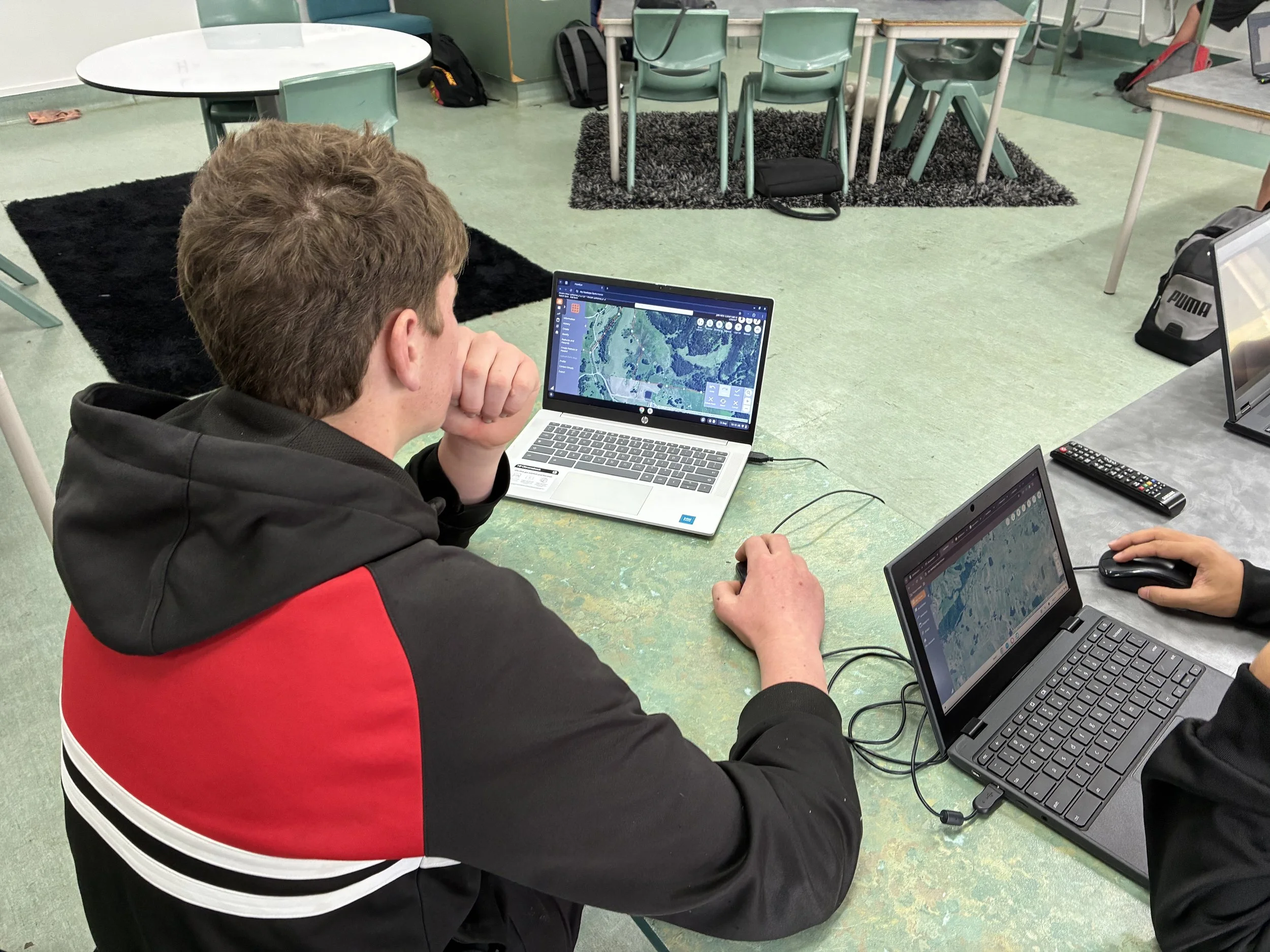
Piopio College agriculture students have gained hands-on experience with HawkEye the technology used to plan aerial fertiliser spreading across New Zealand farms.
Kimberley Cody, from Aerowork’s Te Kūiti and Taumarunui team, recently visited the school’s agriculture class to teach students how digital farm mapping helps farmers plan where fertiliser should—and should not—be applied.
Each student was given access to HawkEye, Ravensdown’s farm mapping and nutrient management software. Students could work with maps of their own family farms or use the small farm located on the Piopio College grounds.
Under Kimberley’s guidance, the students drew application areas, measured paddocks and identified exclusion zones. They also learned how information recorded on a farm map can be used to plan an aerial fertiliser application for the Aerowork team.
Exclusion zones are an important part of aerial application planning. They allow waterways, wetlands, native vegetation, buildings, tracks, stock areas and other sensitive or unsuitable locations to be clearly marked so pilots know where fertiliser should not be applied.
Kimberley said the session gave students the opportunity to explore the technology themselves while understanding how it connects to practical work on a farm.
“The students were able to draw their own application areas, calculate how much land was included and identify the places that needed to be excluded,” Kimberley said.
“It helped them understand why an accurate farm map matters and how the information they enter can support good decisions before the aircraft even arrives.”
As part of the class they learnt about the accurate mapping can provide both financial and environmental benefits for farmers. Clearly defining the application area helps ensure fertiliser is directed to the land where it is required, reducing unnecessary application and helping farmers get better value from their fertiliser investment.
The HawkEye programme allows farmers to map exclusion zones to help protect waterways, wetlands and other sensitive areas, while keeping clear records of fertiliser orders and application areas. These digital records can support environmental planning, nutrient reporting and farm assurance requirements.
The lesson also delivered a practical result, with agriculture teacher Lynette Perrett using HawkEye to place an aerial lime order for her own farm, which Aerowork is now preparing to complete.
Lynette said the practical nature of the session helped students understand how digital tools are being used in modern agriculture.
“The students really enjoyed being able to work with actual farm maps and learn not only how to use the technology, but why the information is important,” Lynette said.
“There was a high level of engagement across the class, and most of the students wanted to continue working on their maps during the next lesson.”
For students from farming families, the session provided skills they could take home and apply to their own properties. For others, it offered an introduction to the range of planning, technology and aviation roles that contribute to agricultural production in New Zealand.
Kimberley said connecting with young people was a valuable opportunity to share the knowledge behind aerial spreading and show that every successful application begins well before take-off.
‘Aerial spreading is about much more than flying over a farm, she said. It involves understanding the land, identifying sensitive areas, planning the right application area and making sure everyone involved has clear and accurate information.
These students are the next generation of farmers and rural professionals. Giving them the opportunity to use the same tools being used across the agricultural sector helps prepare them for where farming is heading.”
The session reflects Aerowork’s commitment to supporting rural communities and sharing the skills, technology and local knowledge behind safe, accurate and environmentally responsible aerial application.
Photo: Piopio college students learning farm mapping using HawkEye
-
Pitching in after the storm
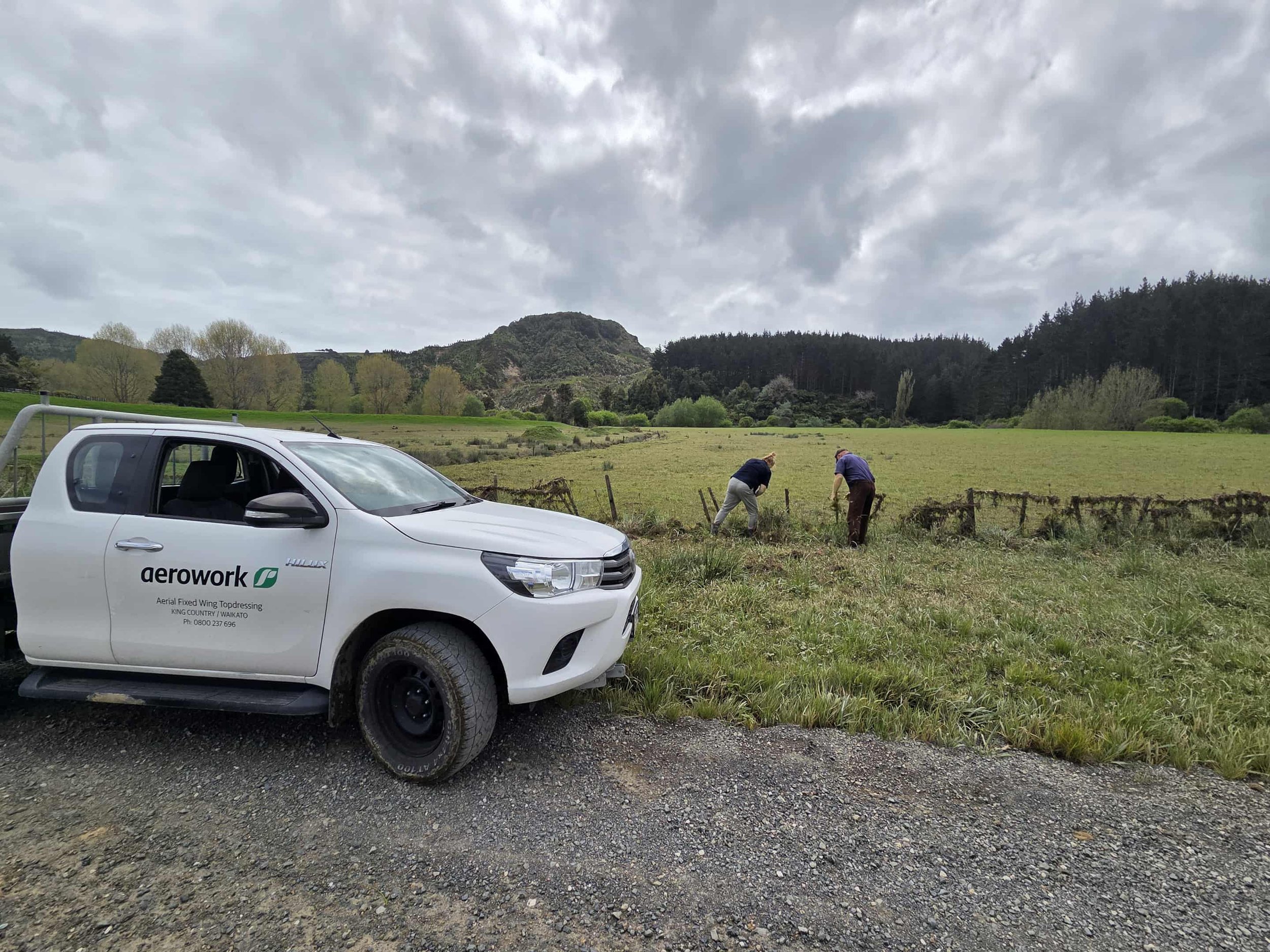
After the recent floods in Awakino, the local school organised a small group of students to help clear debris from neighbouring farms. Wanting to support the effort, Aerowork staff members Kimberley & Hayden Cody joined in for the day. They took the Aerowork 4WD ute — perfect for hauling logs, shifting debris, and getting into the hard-to-reach parts of the valley.
Together with the students, they spent the day clearing fences and helping clean up flood damage. One dairy farm had nearly 80% of its land underwater, and with most of its fencing powered by electricity, nothing could be turned back on until the debris was cleared. The job wasn’t glamorous, but it was essential — removing logs, pulling branches off fence lines, and helping the farmer get one step closer to being operational again.
For Kimberley and Hayden, it wasn’t about recognition, it was simply about showing up for their community when people needed an extra pair of hands.
-
![]()
Aira Horse Sports
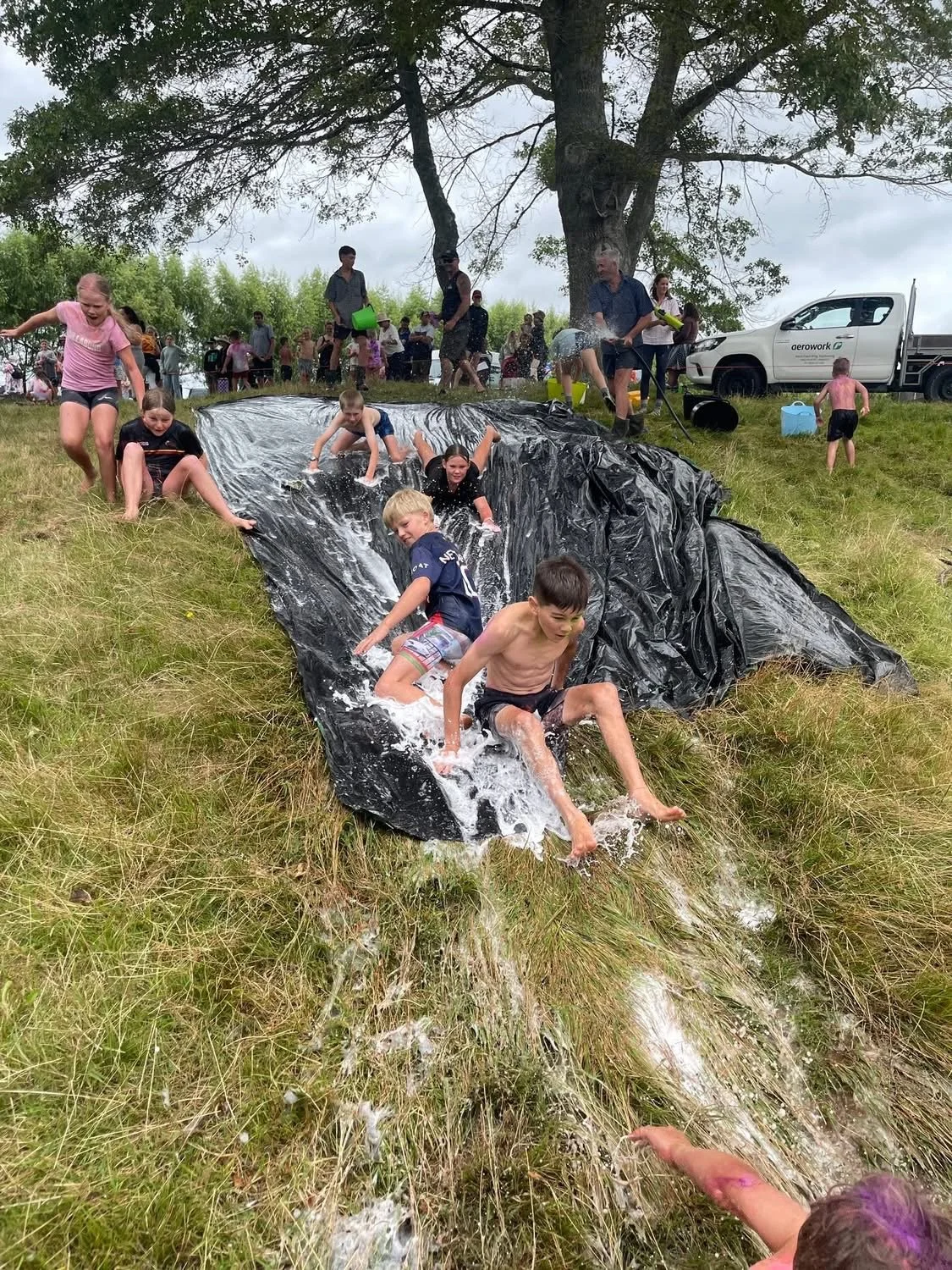
Aerowork was proud to support the local Aira community through sponsorship of their Horse Sports on Waitangi Day. As part of our commitment to backing rural events, team members Kimberley Cody and Glenn Russell were on the ground throughout the day assisting organisers and ensuring the event ran smoothly. Aerowork supplied the gazebo which provided welcome shade for the horse judges. Kimberley also helped run a popular Colour Run, with Glenn handing out chocolates and and prizes.